

Semi-Automatic Filling Machine: Flexible Cost-Effective Filling Solution for Small to Medium Manufacturers
2026-08-13 08:33:47
admin
8
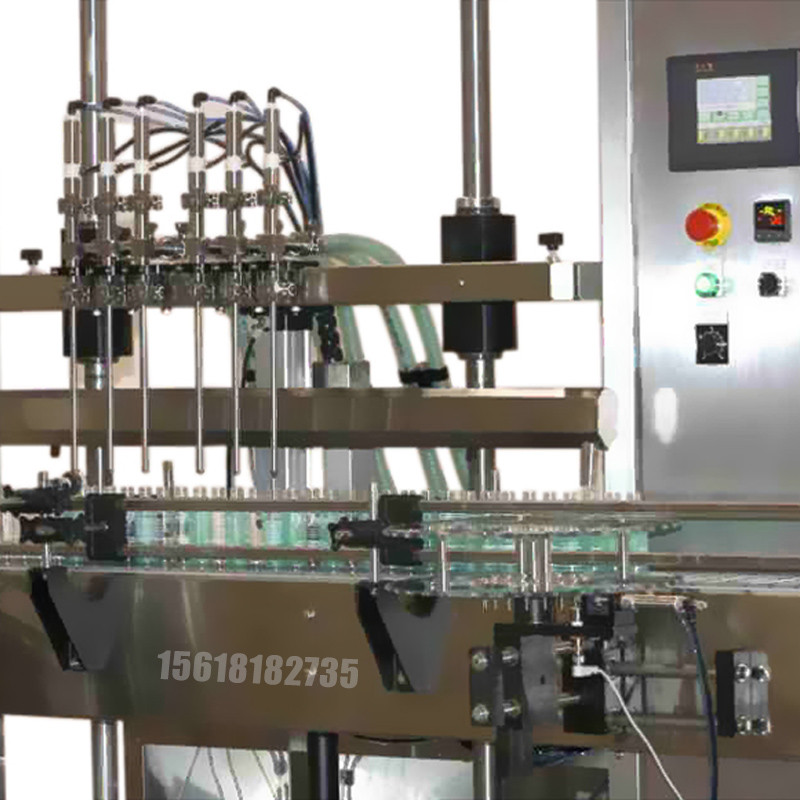
The packaging machinery market is dominated by fully automatic production lines designed for large-scale mass manufacturing. However, most small workshops, startup factories, and processing enterprises face flexible production demands, including frequent formula switching, diverse packaging specifications, and limited budget investment. This SEO-optimized article focuses exclusively on semi-automatic filling machines, a unique equipment category never covered in our previous filling machine guides. Different from high-speed rotary monoblock lines, precision peristaltic fillers, or industrial net weight systems, semi-automatic filling units balance accurate dosing, operational flexibility, and low investment costs, becoming the most practical packaging solution for small and medium-sized production scenarios. This content strictly follows Google E-E-A-T standards, providing targeted industry insights for global packaging buyers.
Semi-automatic filling machines are versatile semi-automated packaging devices that combine manual container placement with automatic quantitative filling. They support liquid, gel, low-viscosity paste, and mild granular material filling, covering most daily chemical, food, cosmetic, and small pharmaceutical production needs. Unlike fully automated lines that require fixed workshop layouts and large order volumes, semi-automatic fillers adapt to flexible batch production, customized orders, and frequent product replacement. For decades, they have remained the mainstream choice for new factory line deployment and multi-product mixed production due to their stable performance, simple operation, and ultra-low maintenance thresholds.
Working Principle of Semi-Automatic Filling Machines
Semi-automatic filling equipment adopts a human-machine collaborative working mode with a simple and reliable mechanical principle. The core system includes a material storage tank, precision dosing pump, intelligent control panel, and filling nozzle assembly. Operators manually place empty bottles, jars, or pouches at the fixed filling position and trigger the filling program via foot switch or button control. The built-in PLC system executes fixed-volume or fixed-weight quantitative filling stably according to preset parameters.
Once the filling cycle is completed, the machine automatically stops material output to avoid overflow and waste, and workers replace containers for the next cycle. Most upgraded models support adjustable filling speed, dosage range, and delayed cut-off settings, effectively solving dripping and residual material problems. All material contact parts adopt food-grade 316L stainless steel, ensuring sanitary production and convenient daily disassembly and cleaning, compatible with multiple types of raw materials without cross-contamination risks.
Core Competitive Advantages
Semi-automatic filling machines fill the market gap between manual filling and full-automatic production lines, possessing irreplaceable practical advantages for SME manufacturers:
Ultra-High Operational Flexibility. The equipment requires no fixed conveyor belt or complex assembly line layout. It supports free switching of different container shapes, capacities, and material types, perfectly adapting to customized small-batch orders and seasonal product updates.
Low Entry Investment & Fast ROI. Compared with expensive full-automatic lines, semi-automatic fillers have low equipment costs and no complex installation requirements. Most manufacturers can recover investment costs within 3 to 6 months through improved efficiency and reduced material waste.
Simple Operation & Low Labor Threshold. Equipped with intuitive touch screen parameter setting, the machine requires no professional technical training. Ordinary workers can master filling parameter adjustment and daily operation in a short time, reducing enterprise training costs.
Stable Filling Accuracy & Low Defect Rate. Replacing pure manual weighing and filling, the intelligent dosing system maintains stable filling accuracy within ±0.5%, effectively reducing underfilling, overfilling, and material waste, greatly improving product batch consistency.
Minimal Maintenance & Strong Durability. With simplified mechanical structure and fewer vulnerable parts, semi-automatic fillers have extremely low failure rates. Daily maintenance only requires regular cleaning and lubrication, adapting to long-term intermittent production modes of small factories.
Applicable Scenarios & Industry Uses
Semi-automatic filling machines serve diversified small and medium-scale production industries with flexible demands:
Cosmetic & Personal Care Industry: Facial toner, lotion, essential oil, hand sanitizer, and mild cream products for small-batch customized skincare packaging.
Food & Beverage Industry: Honey, syrup, sauce, fruit juice, and seasoning liquid, suitable for specialty food workshop production and trial sales batch packaging.
Daily Chemical Industry: Detergent, cleaning solution, disinfectant, and laundry liquid, meeting flexible production demands for regional daily chemical brands.
Fine Chemical & Laboratory Industry: Mild chemical reagents, liquid additives, and experimental sample filling for low-frequency, high-precision small-batch production.
Clear Application Limitations
To avoid improper equipment selection, manufacturers need to clarify the limitations of semi-automatic fillers. Restricted by manual container placement, they cannot support ultra-high-speed mass production for large orders. Meanwhile, they are not suitable for ultra-high viscosity pastes, easy-layered granular suspensions, and fully sterile pharmaceutical-grade production that requires zero manual contact. Choosing semi-automatic models is the most cost-effective solution for flexible, small-batch, and multi-variety production demands.
Common Market Misconceptions
Many buyers mistakenly believe semi-automatic machines have low accuracy and unstable performance. In fact, modern servo-driven semi-automatic filling systems achieve commercial-grade accuracy fully compliant with market sales standards. Another common misunderstanding is that semi-automatic equipment will be eliminated by full-automatic lines. On the contrary, its flexible and low-cost advantages are irreplaceable for startups and customized processing factories with variable orders.
Conclusion
Semi-automatic filling machines act as the perfect transitional and auxiliary packaging solution between inefficient manual filling and high-cost full-automatic production lines. With outstanding flexibility, low investment, stable accuracy, and simple maintenance, they solve the core pain points of high cost, inflexibility, and poor batch consistency for small and medium manufacturers. For startups, customized processing workshops, and enterprises with frequent product updates and unstable order volumes, semi-automatic filling machines remain the most cost-effective, practical, and high-value filling equipment choice in the modern packaging industry.


